Technology without boundaries. Infrastructure without excuses.
Ventris Worldwide designs, coordinates, deploys, manages and scales the technology environments modern organizations depend on.
From cloud and managed infrastructure to SaaS, data centers, networking, automation, customer success and global deployment, we bring the technology, people, partners and operations together under one strategy.
One technology relationship. Every layer considered.
Ventris Worldwide is a global technology, infrastructure, cloud, SaaS, data center, managed services, customer success, deployment and technology operations company. We coordinate and manage the complete technology relationship around the customer.
Technology companies know their technology. Ventris Worldwide knows how to make that technology work for the customer.
Most environments are built from many providers: a cloud platform, a data center, a regional MSP, a carrier, a security vendor, a software company, field engineers, an internal IT team. Each one is good at its part. Very few of them are responsible for the whole.
We sit between the customer and that ecosystem. We define what the customer needs, structure the commercial relationships, select the right specialists, manage implementation, and stay accountable for the outcome long after go-live. Our work spans what customers expect, how technology should be sold and negotiated, how partners should work together, how support and escalation should be structured, and how environments should scale.
Our model
Global technology. Local execution. One accountable relationship.
Our scope
From strategy to infrastructure. From infrastructure to operation.
Our standard
Complex infrastructure. Clear ownership.
The ecosystem
Cloud providers
Data centers
Managed service providers
Software companies
Network providers
Connectivity providers
Security providers
Field engineers
Technical support teams
Internal IT teams
Technology vendors
Specialized technical teams
Ventris Worldwide
Architecture
Commercial management
Partner orchestration
Implementation
Escalation
Customer success
The customer
One relationship
One plan. One point of accountability.
The customer should not have to manage twelve technology companies to make one environment work.
For technology providers and their customers
You know technology. We know the customer.
Technology providers already have engineers, products, software, infrastructure, support teams and deep technical expertise.
What Ventris Worldwide brings is the customer success and commercial framework around that technology. We make sure the pillars of customer success are established before the customer is handed to implementation or engineering, not reconstructed afterwards from a ticket queue.
Fifteen questions answered before engineering begins
What problem are we solving?
What does success look like?
What are the expectations?
Who owns each responsibility?
What are the commercial terms?
What are the technical dependencies?
How will implementation work?
How will migration work?
How will communication work?
Who handles escalation?
How will support work?
How will performance be measured?
How will the customer be retained?
How can the customer expand?
What comes next?
Engineers should receive a prepared customer.
When the customer arrives with the groundwork done, engineers can engineer. Support teams can support. Partners can deliver what they do best. Ventris Worldwide maintains ownership of the overall customer experience.
HANDOFF RECORDSTATUS: READY FOR ENGINEERING
Objectives
Clear and agreed
Expectations
Realistic and written
Commercial parameters
Defined
Stakeholders
Known and named
Implementation requirements
Documented
Technical goals
Measurable
Communication paths
Established
Escalation procedures
Agreed
Success criteria
Signed off
Customer success
Customer success is part of the architecture.
A deployment can pass every technical test and still fail the customer. Customer success is not a sales function added at the end. It is designed alongside the technical architecture, with the same rigor.
How technically successful projects fail operationally
F-01Expectationswere never set, or set poorly
F-02Communicationwas inconsistent or absent
F-03Ownershipwas unclear between providers
F-04Supportwas never defined
F-05Billingwas misunderstood
F-06Migrationwas poorly planned
F-07Stakeholderswere not aligned
F-08Escalationdid not work when it mattered
F-09Userswere not prepared for the change
F-10Successwas never defined, so it could not be reached
None of these are engineering failures. All of them end engineering projects.
Ventris Worldwide builds the customer success framework alongside the technical design: who owns what, how progress is communicated, how billing works, how users are prepared, how escalation is routed, and how success will be measured. The customer receives a working environment and an operating relationship that keeps it working.
The customer lifecycle
01
Discover
Understand the operation, the problem and the people who depend on the outcome.
02
Architect
Design the technical environment and the success framework together.
03
Negotiate
Structure commercial terms, responsibilities and partner scope.
04
Deploy
Coordinate implementation with named owners and a communication plan.
05
Validate
Confirm the environment works for the business, not only for the test plan.
06
Support
Activate defined support paths and escalation from day one.
07
Manage
Run vendor, partner and account management as a continuous discipline.
08
Optimize
Improve cost, performance and resilience based on real operating data.
09
Expand
Plan the next requirement before it becomes an emergency.
Capability matrix
Cloud to rack. Application to endpoint. Strategy to operation.
Seven disciplines, coordinated under one strategy. Some are delivered by our internal team, others by specialist partners we select and manage. The customer sees one plan and one accountable relationship.
CLD
Cloud & Hybrid Infrastructure
14 capabilities
AWS
Cloud architecture
Compute
Storage
DNS
CDN
Certificates
Cloud migration
Hybrid infrastructure
Backup
Monitoring
High availability
Disaster recovery
Cost optimization
MGD
Managed Technology
11 capabilities
Remote support
Technical support
Field support
Endpoint management
Identity
Access management
Vendor coordination
Monitoring
Documentation
Escalation management
Technology lifecycle management
DC
Data Centers
18 capabilities
Data center planning
Rack strategy
Compute
Storage
Network architecture
Rack and stack
Structured cabling coordination
Fiber coordination
Carrier coordination
Cross connects
Power planning coordination
UPS coordination
Remote hands
Physical security coordination
Monitoring
Commissioning
Documentation
Expansion planning
SW
Software & SaaS
14 capabilities
Secure portals
Customer portals
Internal tools
Dashboards
CRM
Databases
APIs
Workflow systems
Automation
AI integration
Role-based access
Reporting
Document systems
Cloud-hosted applications
NET
Networking
13 capabilities
LAN
WAN
VLAN
VPN
WiFi
Firewalls
Routing
Switching
Network segmentation
Multisite connectivity
Secure remote access
ISP coordination
Redundant connectivity
AUT
Automation & AI
9 capabilities
AI integration
Workflow automation
Automated reporting
Operational automation
Data workflows
Internal AI systems
Customer service automation
API integration
Business process automation
OPS
Operations
11 capabilities
Technology roadmaps
Vendor management
Implementation management
Procurement coordination
Service delivery
Documentation
Customer success
Escalation
SOPs
Global rollout
Multisite rollout
What makes the model different
Architecture before procurement
We decide what the environment needs before anyone decides what to buy.
One accountable technology relationship
Many providers can be involved. One organization answers for the result.
Technical + operational thinking
Every design decision is tested against how the business actually runs.
Customer success by design
Ownership, communication and success criteria are built in, not bolted on.
Global standards + local resources
One operating standard, delivered by the right people in each region.
Cloud to physical infrastructure
From AWS environments to racks, fiber and field dispatch.
Full lifecycle ownership
Conversation, architecture, deployment and long-term operation.
Commercial + technical alignment
Pricing, contracts and scope match what was actually designed.
Partner orchestration
Specialists deliver their part. We coordinate the whole.
Business-aware technology
Budget, risk, downtime and growth shape the architecture from the start.
Cloud & hybrid infrastructure
The destination follows the requirement.
Ventris Worldwide designs and deploys solutions on AWS infrastructure, and delivers managed private and hybrid cloud with our strategic partner OTAVA. We choose the platform after we understand the workload, the risk and the operating model.
Cloud platform
Cloud environments powered by AWS
Public cloud environments for application infrastructure, web infrastructure, hosting, remote infrastructure and hybrid architecture, designed to scale and to be supported.
Amazon EC2Compute for application servers, rehosted workloads and destination environments.
Amazon LightsailSimplified hosting for web infrastructure and smaller application stacks.
Amazon S3Object storage for assets, backups and data retention.
Amazon CloudFrontContent delivery and edge caching for web and application traffic.
DNSZone design, record management and controlled DNS changes during migration.
Certificate managementSSL/TLS issuance, renewal and coverage across environments.
DatabasesManaged and self-hosted database environments, including PostgreSQL.
NetworkingCloud networking, segmentation, VPN and hybrid connectivity.
MonitoringHealth, performance and alerting across the environment.
BackupBackup design, retention and restore verification.
MigrationRehosting from physical, virtual and other cloud environments.
Cost optimizationRightsizing and ongoing review of cloud spend against usage.
Executed strategic partnership
Managed private & hybrid cloud with OTAVA
For customers who want infrastructure managed for them, with data protection and recovery built in.
Managed cloud
Private cloud
Hybrid cloud
Backup
Disaster recovery
Data protection
Managed infrastructure
Compliance-oriented infrastructure
Security-related services
Technical support
Migration support
Ventris Worldwide manages the customer relationship, commercial structure and customer success around these services. How the partnership works
High availability
Designed around what the business cannot afford to lose, and for how long.
Disaster recovery
Recovery objectives defined with the business, then tested, not assumed.
Scaling
Environments sized for today with a documented path to next year.
Cost
Spend reviewed against usage after go-live, not only at purchase.
Data centers
From empty space to operational infrastructure.
A data center environment is a sequence of dependent decisions. Carrier availability shapes network architecture. Power shapes rack density. Rack density shapes cooling and cost. Ventris Worldwide coordinates and manages that sequence from requirements to ongoing operation.
01
Plan
Establish what the environment must do and where it can live.
Requirements
Site assessment
Capacity planning
02
Design
Turn requirements into a physical and logical architecture.
Rack strategy
Compute planning
Storage planning
Network architecture
Redundancy
03
Source
Secure the connectivity, space and equipment the design depends on.
Carrier availability
Fiber
Cross connects
Equipment procurement
04
Build
Prepare the physical environment and install to plan.
Power requirements
UPS
Environmental requirements
Physical security
Rack and stack
05
Deploy
Bring systems online in a controlled sequence.
Configuration
Network turn-up
Management access
06
Commission
Prove the environment performs as designed before production.
Testing
Commissioning
Documentation
07
Monitor
Establish visibility before the first incident, not after it.
Monitoring
Alerting
Environmental telemetry
08
Operate
Run the environment with defined support and on-site coverage.
Remote management
Remote hands
Ongoing support
09
Scale
Expand capacity against a plan, not a crisis.
Capacity review
Expansion planning
Scale
Illustrative 42U elevation. Every rack we deploy is documented to the unit, port and circuit.
Software & SaaS
Sometimes the right platform does not exist yet.
When off-the-shelf software forces the operation to bend around it, we design and deploy the system the operation needs: secure, documented, hosted in the cloud and built to be supported after launch.
Secure portals
Authenticated access to documents, data and workflows.
Customer portals
Self-service for your customers, on your brand.
Internal systems
Tools shaped around how your team actually works.
Dashboards & reporting
Operational visibility from the data you already hold.
Databases
Structured, backed-up, access-controlled data.
Workflow systems
Approvals, handoffs and status in one place.
Document management
Versioned, searchable, permissioned records.
CRM
Customer and pipeline systems that fit the process.
Automation & AI workflows
Repetitive work removed, with people kept in control.
Communications systems
Notifications, messaging and alerting.
APIs & integrations
Systems connected so data moves once.
Role-based access
Every user sees exactly what their role requires.
REPRESENTATIVE STACKcloud-hosted application
EdgeCloudFrontDNSSSL/TLS
ApplicationNext.jsAPIsRBAC
RuntimeLinuxDockerNginxApache
ComputeAWS EC2AWS Lightsail
DataPostgreSQLAmazon S3
OperationsMonitoringBackupsLogging
Technology is selected per project. Every system ships with access control, backups, monitoring and documentation as defaults.
Managed services
Support should not begin after something breaks.
Managed technology is the discipline of preventing the call. When the call comes anyway, everyone should already know who answers it, who is escalated to, and what happens next.
Continuous
Work that happens whether or not anything is wrong.
Monitoring
Maintenance
Patch coordination
Backup verification
Access management
Documentation
Capacity planning
Responsive
Defined paths for when something needs attention.
Remote support
Field dispatch
Incident escalation
Vendor management
Strategic
Keeping the environment aligned with the business.
Performance review
Customer success
Technology roadmaps
Engagement models
ADVISE
Architecture, technology roadmaps, vendor evaluation and commercial review.
For organizations deciding what to do next.
BUILD
Design and deployment of a defined environment or platform, delivered to documented acceptance.
For a specific project with a clear outcome.
MANAGE
Ongoing management of the environment, its partners and its vendors, with defined escalation and review.
For environments that need an accountable owner.
OPERATE
Ventris Worldwide runs the technology operation day to day as an accountable extension of the customer’s team.
For organizations that want technology run for them.
GLOBAL
Multisite and international programs delivered to one central standard with local execution.
For distributed operations across regions.
Every engagement is scoped to the environment, its risk and its operating model.
Migration
Seamless does not mean simple.
A seamless customer experience usually means considerable complexity was managed correctly behind the scenes. We plan, coordinate and communicate every migration so the business keeps running while the infrastructure underneath it changes.
FromTo
Physical serversCloud
VMwarePrivate cloud
On-premisesAWS
Other cloudAWS
Legacy infrastructureOTAVA
Data centerHybrid cloud
CloudManaged private infrastructure
Destination · OTAVA
Managed private, hybrid and protected infrastructure
Appropriate when the customer wants managed cloud, private cloud, hybrid infrastructure, backup, disaster recovery, data protection, managed infrastructure, technical support or migration support.
Destination · AWS
Public cloud rehosting and modernization
Appropriate for public cloud lift and shift: continuous replication, testing before production cutover, controlled migration to EC2 destination environments, cloud networking, storage, backup, monitoring, DNS, security and post-migration optimization.
The customer should not have to become the project manager for their own migration.
The infrastructure may involve multiple providers. The customer experience should not.
Ventris Worldwide combines central architecture, standards and accountability with local partners and technical resources in each region we serve.
AUSAustinUnited States30.27°N 97.74°W--:--
MADMadridSpain40.42°N 3.70°W--:--
MILMilanItaly45.46°N 9.19°E--:--
JKTJakartaIndonesia6.21°S 106.85°E--:--
BUEBuenos AiresArgentina34.60°S 58.38°W--:--
MEDMedellínColombia6.24°N 75.58°W--:--
MEXMexico CityMexico19.43°N 99.13°W--:--
Central
Held to one standard
Architecture
Customer success
Standards
Documentation
Commercial management
Vendor management
Accountability
Local
Delivered in region
Managed service providers
Field technicians
Connectivity providers
Data centers
Infrastructure partners
Technical resources
The environment may be distributed. The operating standard should not be.
Partners
The right technology. The right specialist. The right place.
We select partners for what they do best and manage them as one delivery team. Formal partnerships are named as such. Everything else is described as exactly what it is.
OTAVA brings deep technology and managed infrastructure expertise. Ventris Worldwide makes that technology commercially, operationally and strategically successful for the customer.
OTAVA provides, based on the solution
Managed cloud
Private cloud
Hybrid cloud
Backup
Disaster recovery
Data protection
Managed infrastructure
Technical support
Compliance-oriented infrastructure
Security-related services
Migration support
Ventris Worldwide manages
Commercial negotiation
Pricing and deal structure
Customer opportunities
Partner strategy
Solution coordination
Implementation expectations
The customer relationship
Ongoing account management
Customer success strategy
The OTAVA relationship is managed directly by Joel Martin, Chief Executive Officer.
Cloud platform
AWS
Ventris Worldwide designs and deploys solutions on AWS infrastructure: AWS-based environments for compute, storage, content delivery, hosting, databases, networking, backup, monitoring and migration.
Regional MSP network
Local managed service providers for on-the-ground support.
Data centers
Colocation and hosting space matched to the requirement.
Connectivity providers
Carriers, ISPs and fiber for primary and redundant paths.
Software providers
Platforms and applications selected for fit.
Security providers
Specialist security capabilities where the risk requires them.
Field services
Technicians for installation, remote hands and dispatch.
Cloud platforms
Public, private and hybrid platforms, including AWS.
Backup & recovery
Data protection and recovery capability, including OTAVA.
For technology partners
We protect your customer relationship. You receive a prepared customer, clear commercial terms, realistic expectations and a partner who owns communication and escalation. Your engineers spend their time on engineering.
Leadership
Leadership where technology meets the customer.
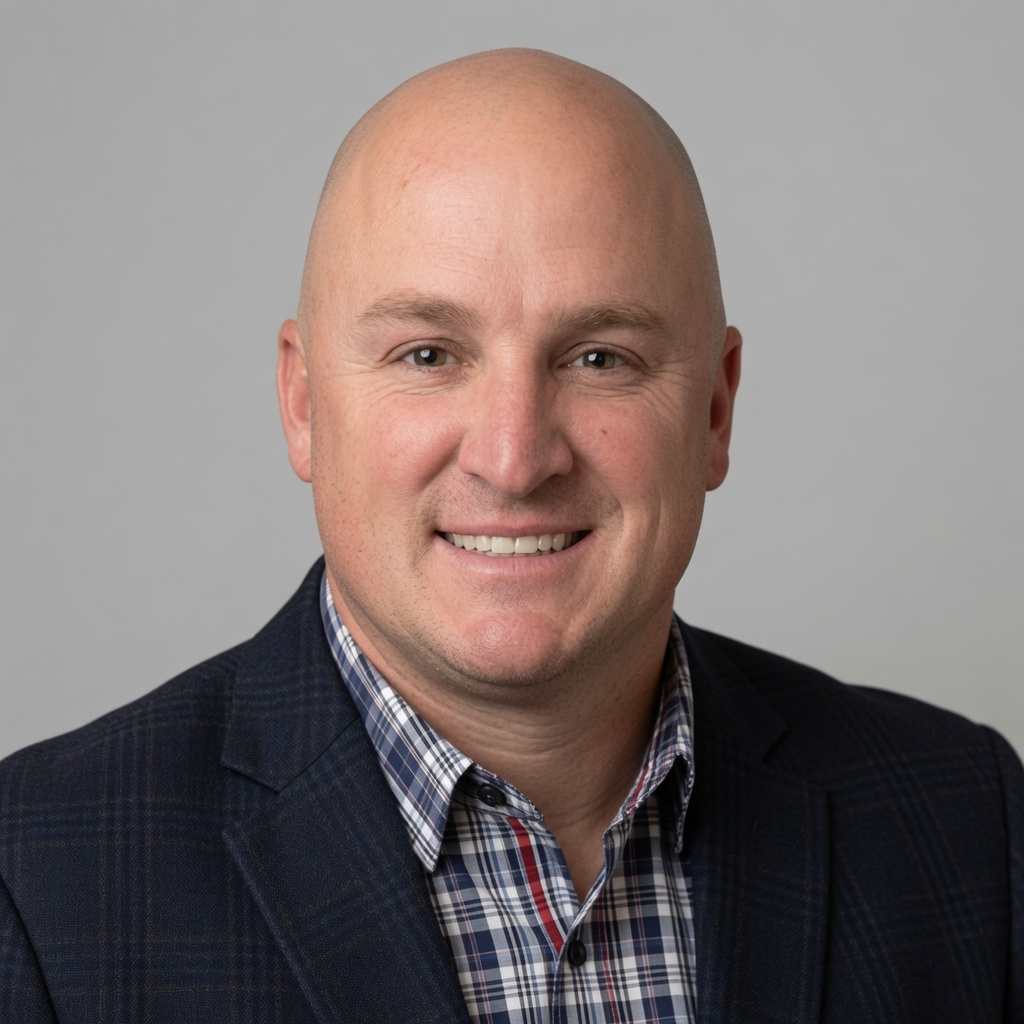
Joel Martin
Chief Executive Officer Ventris Worldwide
Operates at the intersection of
Technology
Customers
Business
Sales
Infrastructure
Operations
Deployment
Customer success
Negotiations
Vendors
Partnerships
Solution strategy
Joel Martin leads Ventris Worldwide at the point where technology, customers and commercial reality meet.
His role is not to out-engineer specialist engineers. It is to make sure the right engineers, partners and providers are working on a well-defined problem, under the right commercial structure, with the customer’s success defined before work begins, and to stay accountable for that outcome afterwards.
Joel directly manages the executed OTAVA relationship, including commercial negotiations, pricing, deal structure, customer opportunities, solution coordination, partner strategy, customer success and ongoing account management.
Understands technology deeply enough to
Communicate with engineers
Understand architecture
Evaluate solutions
Challenge assumptions
Manage deployments
Sell technical solutions
Negotiate commercial structures
Manage vendors
Translate technical concepts for executives
Translate business requirements for technical teams
Manage customer relationships
Manage customer success
Coordinate complex technology ecosystems
Understands what customers carry
Budget pressure
Downtime concerns
Risk
Security
Growth
Support expectations
Implementation anxiety
Vendor complexity
Executive communication
Procurement
Commercial negotiation
Operational continuity
Customer retention
Practical technology exposure
AWS
Linux
Cloud hosting
EC2
Lightsail
S3
CloudFront
DNS
SSL/TLS
Databases
PostgreSQL
Secure portals
Role-based access
Dashboards
Automation
AI workflows
CRM
Google Workspace
Microsoft 365
Identity
Networking
WiFi
VLAN
VPN
Firewalls
Endpoints
Remote access
Monitoring
Backup
Disaster recovery concepts
Remote infrastructure
Technology procurement
Technical sales
Technical vendors
Service delivery
Insights · Migration brief
Lift and shift without lifting the customer’s blood pressure.
A successful migration should feel boring to the customer.
Ventris Worldwide6 min read
Behind the scenes, servers may move, workloads may replicate, DNS may change, networks may change, and the cloud platform and infrastructure underneath the business may change entirely.
But the customer’s employees should still be able to work. Their customers should still be able to transact. Their data should remain protected. Their systems should remain available. And their leadership should know what is happening at every stage.
What lift and shift means
Lift and shift, also called rehosting, moves existing workloads to a new environment with minimal change to the applications themselves. The goal is to change where systems run without changing how the business uses them. Modernization can follow once the move is complete and stable.
Rehosting can take many forms:
Physical servers to cloud
VMware to private cloud
On-premises to AWS
Another cloud to AWS
Legacy infrastructure to OTAVA
Data center to hybrid cloud
Cloud to managed private infrastructure
Seamless does not mean simple. A seamless customer experience usually means considerable complexity was managed correctly behind the scenes.
The migration lifecycle
01
Discover
Every migration starts with an inventory, and the inventory is always larger than anyone expects. We catalogue what exists, what it does, who depends on it and what it connects to.
Servers
VMs
Applications
Databases
Storage
DNS
Certificates
Firewalls
VPN
Identity
Backups
Monitoring
Dependencies
APIs
Scheduled tasks
Third-party integrations
Licensing
Business-critical systems
02
Map dependencies
The most dangerous systems are the ones nobody documented: the scheduled task that emails a report every Monday, the hard-coded IP address in a vendor integration, the certificate that only one server holds. Dependencies found in discovery become a line in the plan. Dependencies found during cutover become an outage.
03
Select destination
The destination follows the workload. OTAVA, AWS, hybrid, private cloud, public cloud or managed cloud each suit different requirements for control, compliance, cost, support and recovery. We make the choice with the customer, on paper, before anything moves.
OTAVA
AWS
Hybrid
Private cloud
Public cloud
Managed cloud
04
Build the landing zone
The destination environment is built and secured before the first workload arrives, so migrated systems land somewhere ready to run them.
Compute
Storage
Network
Routing
Firewalls
VPN
Identity
DNS
Certificates
Monitoring
Backup
Logging
Security
Management access
Documentation
05
Replicate
Replication copies workloads and data to the destination while the production system remains operational. Users keep working. The business keeps transacting. The destination catches up in the background.
06
Test
Replicated systems are tested in the destination before production depends on them. Testing covers what the business does, not only whether the server boots.
Application
Database
Authentication
Integrations
Performance
Backup
Security
User access
Business workflows
07
Plan cutover
Cutover is a scheduled event with owners, checkpoints and a way back. Everyone involved knows their role, the timeline and the criteria for proceeding.
Owners
Communications
Checkpoints
Go / no-go
Rollback
DNS
Validation
Executive communication
Escalation
08
Cutover
A final replication brings the destination current. Production is switched, DNS and routing are changed, and validation begins immediately against the plan.
Final replication
Switch production
DNS / routing changes
Validation
09
Validate
The environment is confirmed working from the user’s side of the screen: applications, data, access, integrations and the controls that protect them.
Applications
Data
Users
Integrations
Monitoring
Backups
Performance
Security
10
Stabilize
Move first. Validate. Stabilize. Observe. Then optimize. The period after cutover is for watching the environment under real load, not for changing it.
11
Optimize
Once the environment is stable, the improvements that justify the migration can begin, one controlled change at a time.
Rightsizing
Cost optimization
Modernization
Managed services
Automation
Improved backup
Redundancy
Monitoring
Containers
Application modernization
Disaster recovery
When OTAVA is the right destination
OTAVA may be appropriate when customers want managed cloud, private cloud, hybrid infrastructure, backup, disaster recovery, data protection, managed infrastructure, technical support or migration support. OTAVA provides the appropriate managed technology capabilities based on the solution.
Ventris Worldwide manages the customer relationship, commercial structure, pricing discussions, negotiation, customer success, expectations, implementation communication and ongoing account strategy.
When AWS is the right destination
AWS supports public cloud lift and shift and later modernization. A typical AWS migration uses continuous replication to keep the destination current, testing before production cutover, and a controlled migration into EC2 destination environments, with cloud networking, storage, backup, monitoring, DNS and security designed in the landing zone. Post-migration optimization then brings cost and performance in line with actual use.
The customer should not have to become the project manager for their own migration.
The infrastructure may involve multiple providers. The customer experience should not. That is the job: one plan, one communication path, one accountable relationship, from the first inventory to the last optimization.